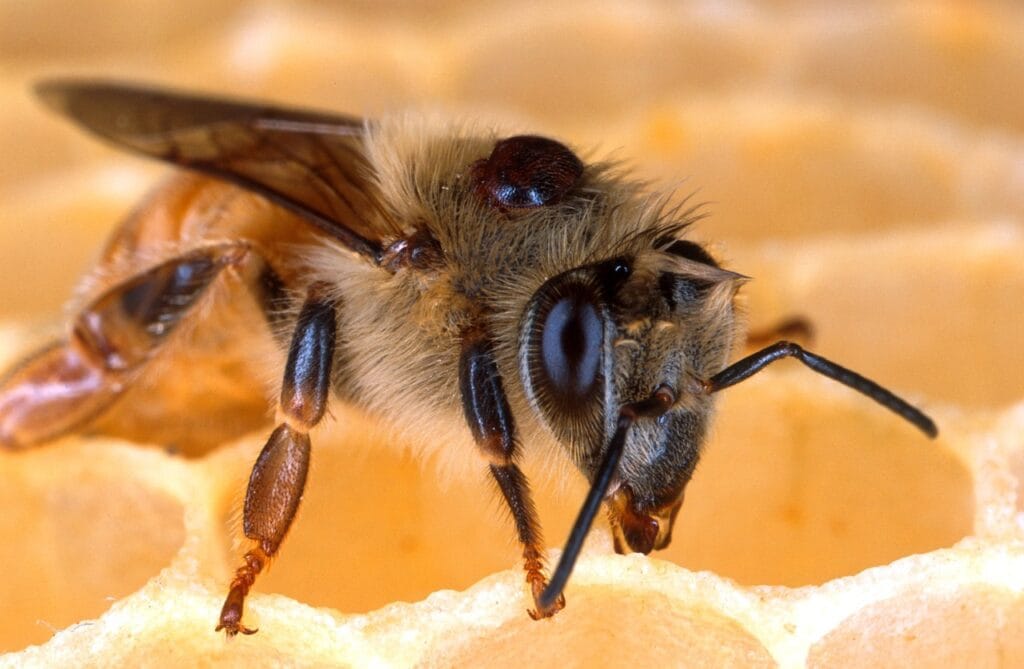
Image by Quang Nguyen Vinh via Pexels
Sustainable beekeeping has emerged as a critical practice that balances honey production with ecological stewardship, bee health, and environmental conservation.
This comprehensive approach to apiculture extends far beyond traditional honey harvesting to encompass biodiversity preservation, climate resilience, and community empowerment across diverse global contexts.
Core Principles of Sustainable Beekeeping
Natural and Organic Management Systems
The foundation of sustainable beekeeping rests on minimal intervention and natural practices that respect bee biology and behavior[1].
Research conducted by Penn State University demonstrates that organic honey bee colony management not only maintained equivalent colony health but achieved higher honey production and net economic returns compared to conventional systems[2][3].
These organic approaches prioritize the use of natural materials and substances while avoiding synthetic chemicals and antibiotics[4][5].
Key elements of natural beekeeping include:
- Foundationless hives that allow bees to build comb with natural cell sizes, drastically improving their ability to fight Varroa mites[6]
- Minimal hive inspections – ideally only once annually during autumn before honey harvest[7]
- Natural swarming allowance as the bees’ natural reproduction method[8]
- Chemical-free pest management using cultural, mechanical, and biological controls[3][4]
Treatment-Free and Integrated Pest Management
Modern sustainable beekeeping increasingly embraces treatment-free methodologies or integrated pest management (IPM) approaches.
Treatment-free beekeeping operates on the principle of allowing bees to develop natural resistance to pests and diseases over time[9][10].
However, successful implementation requires careful monitoring and often involves maintaining larger colony numbers than intended to account for natural losses[11].
For beekeepers who choose intervention, organic treatments provide effective alternatives:
- Formic acid and oxalic acid – naturally occurring compounds that effectively control Varroa mites without synthetic residues[12][13]
- Essential oils including thymol from thyme plants, which can control mites on adult bees[12][14]
- Cultural practices such as drone brood removal and screened bottom boards[5][15]
Regional Sustainable Practices
Asian Approaches – Native Species and Traditional Knowledge
In Southeast Asia, sustainable beekeeping focuses on native species utilization, particularly the Eastern honey bee (Apis cerana), which is better adapted to local environments and more resistant to native pests and diseases than introduced European bees[16].
This approach reduces costs by up to 40% compared to modern beekeeping systems while supporting local biodiversity[16].
Traditional Asian beekeeping methods emphasize:
- Use of recycled materials and local resources
- Integration with existing agricultural systems
- Community-based knowledge sharing
- Preservation of indigenous bee varieties
African Conservation Models
African beekeeping initiatives demonstrate how sustainable practices can simultaneously support conservation and community development. In Kenya, traditional log hives and the modern Kenyan Top-Bar Hive (KTBH) enable sustainable honey harvesting without destroying colonies[17].
The innovative “Elephants and Bees” program has introduced beehive fences to 14 countries in Africa and three in Asia, creating natural barriers that protect crops while providing honey income[18].
Latin American Indigenous Practices
Indigenous communities in South America maintain sophisticated beekeeping traditions using native stingless bees. The Guarani people of Brazil raise Tetragonisca angustula (jataí) and other native species in traditional containers, integrating beekeeping with forest restoration efforts[19][20].
These practices support up to 90% of Atlantic Forest and Amazon plants that depend on stingless bees for pollination[20].
Maya communities in the Yucatán Peninsula have maintained Melipona beecheii beekeeping for over 3,000 years, using hollow log hives that enable honey extraction without damaging combs[21][22].
This ancient practice continues to adapt to modern conditions while preserving cultural and ecological knowledge[23].
Regenerative Approaches in Developed Countries
Regenerative beekeeping represents an evolution beyond sustainable practices, focusing on actively improving ecosystem health rather than merely maintaining it[24][25][26]. This approach emphasizes:
- Ecosystem restoration through pollination services
- Carbon sequestration support through plant diversity promotion
- Biodiversity enhancement in both rural and urban settings
- Community resilience building through local food systems
Certification and Standards
Organic Certification Systems
Multiple international bodies provide organic beekeeping certification, each with specific requirements:
- USDA Organic requires strict compliance with synthetic chemical prohibitions and detailed record-keeping[27]
- EU Organic Regulation maintains some of the world’s most stringent standards[27]
- Demeter Biodynamic represents the strictest standard globally, requiring additional spiritual and ecological considerations[28][29]
Certification typically requires:
- 3-kilometer forage radius free from synthetic chemicals[30][31]
- Organic hive management without synthetic treatments or antibiotics[31][27]
- Annual inspections and comprehensive documentation[27]
- Residue testing to ensure honey purity[27]
Biodiversity-Focused Standards
The Biodiversity Friend Beekeeping certification specifically targets European and Mediterranean beekeeping, evaluating sustainability performance through environmental and social metrics[32].
These standards emphasize protection of bee genetics and local biodiversity while ensuring ethical treatment of colonies.
Urban and Community-Based Initiatives
Urban Beekeeping Movement
Urban beekeeping has experienced explosive growth, with London seeing a 220% increase in beekeepers between 1999 and 2012[33].
Cities offer unique advantages for sustainable beekeeping, including diverse nectar sources from parks and gardens, reduced pesticide exposure compared to agricultural areas, and shorter supply chains[34][35].
Best practices for urban beekeeping include:
- Strategic hive placement away from high-traffic areas[36][37]
- Community engagement and neighbor education[36][38]
- Integration with rooftop gardens and green building initiatives[35]
- Support for local biodiversity through pollination services[39]
Community Cooperatives and Education
Community-based beekeeping projects demonstrate powerful models for sustainable practice dissemination.
The Portland Urban Beekeepers organization provides education, advocacy, and disease monitoring services to local beekeepers[38]. Similarly, community garden beekeeping projects create apprenticeship programs that train new beekeepers while maintaining hives collectively[36].
Successful community initiatives feature:
- Collaborative learning and knowledge sharing
- Group purchasing of equipment and supplies
- Collective disease monitoring and management
- Educational outreach to broader communities
Climate Resilience and Adaptation
Climate Change Response Strategies
Sustainable beekeeping increasingly focuses on climate resilience through adaptive management practices[40][41].
Key strategies include:
- Genetic diversity preservation through breeding programs that maintain multiple bee strains[40][42]
- Habitat restoration efforts that create pollinator corridors and flowering plant diversity[43][44]
- Water source provision and shade creation in apiaries[41]
- Flexible management adapted to changing seasonal patterns[40]
Habitat Restoration Integration
Beekeeping operations increasingly integrate with habitat restoration projects that benefit entire ecosystems[43][45][46].
These efforts include:
- Pollinator corridor creation along transportation and utility rights-of-way[44][47]
- Native plant restoration that provides diverse forage throughout growing seasons[45][48]
- Riparian area enhancement that supports both aquatic and terrestrial biodiversity[45]
- Grassland restoration that incorporates pollinator-supporting flowering plants[49]
Economic and Social Sustainability
Livelihood Diversification
Sustainable beekeeping provides crucial economic opportunities for rural and marginalized communities worldwide.
In West Africa, new cooperative structures are establishing the first organized regional supply chain for organic wax and honey production[50]. These initiatives combine training, equipment provision, and market access to create sustainable livelihoods.
Value-Added Products and Services
Modern sustainable beekeeping extends beyond honey production to include:
- Pollination services for agricultural operations
- Beeswax and propolis production for cosmetic and pharmaceutical uses[51]
- Educational tourism and bee-focused recreational activities
- Ecosystem service provision through biodiversity support[52]
Research and Innovation
Breeding programs focus on developing bee strains with enhanced disease resistance, climate adaptability, and productivity while maintaining genetic diversity[42][53][54].
Modern techniques include artificial insemination, DNA analysis, and digital record-keeping to accelerate beneficial trait development[42].
Technology integration supports sustainable practices through:
- Hive monitoring systems that provide real-time colony health data
- GPS tracking for optimal foraging area identification
- Database systems for tracking genetic lineages and performance
- Remote sensing for habitat quality assessment
Global Impact and Future Directions
Sustainable beekeeping practices worldwide demonstrate that ecological stewardship and economic viability can successfully coexist. From indigenous stingless bee management in South American forests to urban rooftop hives in major cities, these approaches contribute to biodiversity conservation, climate resilience, and community empowerment.
The future of sustainable beekeeping lies in integrating traditional knowledge with modern scientific understanding, expanding habitat restoration efforts, and developing resilient supply chains that support both bee health and human livelihoods.
As global challenges intensify, these practices provide essential models for harmonizing agricultural production with environmental conservation, ensuring that both bees and human communities can thrive in an interconnected world.
Through continued innovation, education, and international cooperation, sustainable beekeeping will remain a cornerstone of ecological agriculture and biodiversity conservation, supporting the intricate web of relationships between pollinators, plants, and people across diverse global ecosystems.
⁂
- https://hucklebeefarms.com/blogs/help-the-pollinators/sustainable-beekeeping-at-huckle-bee-farms-embracing-nature-without-chemicals-or-antibiotics
- https://www.psu.edu/news/agricultural-sciences/story/organic-beekeeping-rivals-conventional-methods-bee-health-productivity
- https://hub.ofrf.org/resource/working-toward-best-management-practices-for-organic-beekeeping
- https://extension.psu.edu/an-organic-management-system-for-honey-bees/
- https://www.ontariobee.com/sites/ontariobee.com/files/document/Organic Beekeeping Management.pdf
- https://beebuilt.com/pages/natural-beekeeping
- https://www.milkwood.net/2010/10/28/the-way-of-the-bee-an-intro-to-natural-beekeeping/
- https://thebfarm.com/blogs/news/everything-you-need-to-know-about-natural-beekeeping
- https://www.keepingbackyardbees.com/treatment-free-beekeeping-explained/
- https://beeculture.com/treatment-free-menace/
- https://www.youtube.com/watch?v=5qTID9B7Ckc
- https://extension.psu.edu/methods-to-control-varroa-mites-an-integrated-pest-management-approach/
- https://forum.honeyflow.com/t/homeopathic-varroa-treatment/15372
- https://pmc.ncbi.nlm.nih.gov/articles/PMC10970121/
- https://www.thewarrestore.com/organic-treatment
- https://th.boell.org/en/2022/01/26/honey-production-southeast-asia
- https://blythewoodbeecompany.com/blogs/news/beekeeping-traditions-and-practices-from-around-the-world
- https://borgenproject.org/beekeeping-in-africa/
- https://www.ehn.org/indigenous-beekeeping-aids-forest-conservation-and-cultural-preservation
- https://www.biographic.com/the-bee-whisperers/
- https://read.dukeupress.edu/agricultural-history/article/98/1/23/386138/Beekeeping-from-the-SouthThe-Yucatan-Peninsula-s
- https://www.reddit.com/r/AskHistorians/comments/tz3fbn/what_is_the_history_of_bee_keeping_in_mesoamerica/
- https://revista.drclas.harvard.edu/a-journey-to-the-universe-of-bees-from-the-archives-to-the-fields/
- https://steenshoney.com/blogs/manuka-honey/regenerative-beekeeping-with-steens-honey
- https://freshhoneycomb.com/blogs/how-we-harvest/regenerative-practices-and-outcomes
- https://www.beegirl.org/beekeeping
- https://katesrealfood.com/blogs/blog/organic-honey-an-ultimate-guide
- https://demeter.net/certification/standard/
- https://www.demeter-usa.org/downloads/Beekeeping-Hive-STDS-Demeter-International.pdf
- https://www.cfsph.iastate.edu/thelivestockproject/organic-beekeeping/
- https://organicstandard.ua/en/services/inspectionandcertification/beekeeping
- https://biodiversityfriend.org/en/standards/biodiversity-friend-beekeeping/
- https://en.wikipedia.org/wiki/Urban_beekeeping
- https://honeyhousehoney.com/blogs/news/urban-beekeeping-how-city-dwellers-are-embracing-honey-production
- https://www.alveole.buzz/blog/sustainable-urban-beekeeping/
- https://qgardenscf.com/2017/12/01/12-steps-to-start-a-community-beekeeping-project/
- https://clark.wa.gov/community-development/bees-and-beekeeping
- https://portlandurbanbeekeepers.org
- https://www.alveole.buzz/blog/urban-beekeeping-benefits/
- https://tribesbeekeepersassociation.com/beekeeping-in-the-face-of-climate-change-navigating-challenges-and-embracing-solutions/
- https://www.beesfordevelopment.org/blog/what-can-we-do-to-make-beekeeping-more-resilient-to-the-stresses-imposed-by-climate-change/
- https://www.beekeepinggear.com.au/blogs/article/understanding-bee-genetics-and-resilient-hives
- https://www.nwhoneybee.org
- https://www.saveourmonarchs.org/corridors-for-pollinators.html
- https://www.fws.gov/project/riparian-restoration-and-targeted-grazing-bees
- https://www.frontiersin.org/journals/ecology-and-evolution/articles/10.3389/fevo.2024.1358621/full
- https://fcasolutions.org/pollinator-corridors/
- https://landresiliencepartnership.org/pollinator
- https://www.fws.gov/project/grassland-restoration-and-wildfire-bee-populations
- https://www.creativeassociatesinternational.com/story/new-beekeeping-cooperatives-to-improve-livelihoods-in-west-africa/
- https://www.kosterkeunen.com/foundations-of-beekeeping/
- https://www.conservation.org/stories/beekeeping-as-a-conservation-tool
- https://www.ars.usda.gov/research/project/?accnNo=437823&fy=2022
- https://extension.psu.edu/an-introduction-to-honey-bee-breeding-program-design/
- https://www.beekeepinggear.com.au/blogs/article/sustainable-beekeeping-reduce-environmental-impact
- https://www.earthed.co/blog/bee-the-change-how-sustainable-beekeeping-contributes-to-climate-action/
- https://www.naturalbeekeepingtrust.org/learning-from-wild-bees-trees
- https://manukora.com/blogs/honey-guide/ethical-beekeeping
- https://scope-journal.com/assets/uploads/doc/394d4-730-766.202410615.pdf
- https://www.ifad.org/en/w/rural-voices/meet-the-young-rural-people-bringing-back-bees
- https://arocha.org/en/beyond-honey/
- https://www.frontiersin.org/journals/sustainable-food-systems/articles/10.3389/fsufs.2024.1420836/full
- https://www.gobuzzr.com/methods-of-beekeeping/
- https://www.culturalsurvival.org/news/celebrating-indigenous-beekeeping-practices-world-bee-day
- https://www.regenerativebeekeeping.com
- https://americanbeejournal.com/treatment-free-beekeeping-a-practical-hands-on-approach/
- https://www.reddit.com/r/Beekeeping/comments/8ac8fi/help_best_natrual_varroa_mite_solution/
- https://www.reddit.com/r/Beekeeping/comments/thkpsc/id_like_beekeepers_to_educate_me_on_why/
- https://www.ams.usda.gov/sites/default/files/media/NOP Livestock Final Rec Apiculture.pdf
- https://www.naturland.de/images/01_naturland/_en/Standards/Naturland-Standards_Beekeeping.pdf
- https://www.betterbee.com/instructions-and-resources/urban-beekeeping-information-and-tips.asp
- https://thebfarm.com/blogs/news/why-is-beekeeping-good-for-the-environment
- https://www.pollinator.org/project-wingspan
- https://www.youth4nature.org/blog/pollinator-corridors
- https://us.goodman.com/sustainability/sustainability-case-studies/improving-biodiversity-by-supporting-bees
- https://www.ecolandscaping.org/wednesday-february-23-ecology-pollinator-corridors/
- https://www.undp.org/uganda/blog/protecting-bees-enhance-biodiversity-conservation
- https://www.earthcorps.org/wp-content/uploads/The-Native-Pollinator-Habitat-Restoration-Guide-EarthCorps.pdf