Here’s a solid, beginner-friendly approach to planning for nucs.
- Order nucs early (late fall–winter); quality suppliers sell out quickly
- Plan for spring pickup (often April–May, climate dependent)
- Buy local nucs whenever possible for healthier, climate-adapted bees
- Starting with two hives is ideal for comparison and support
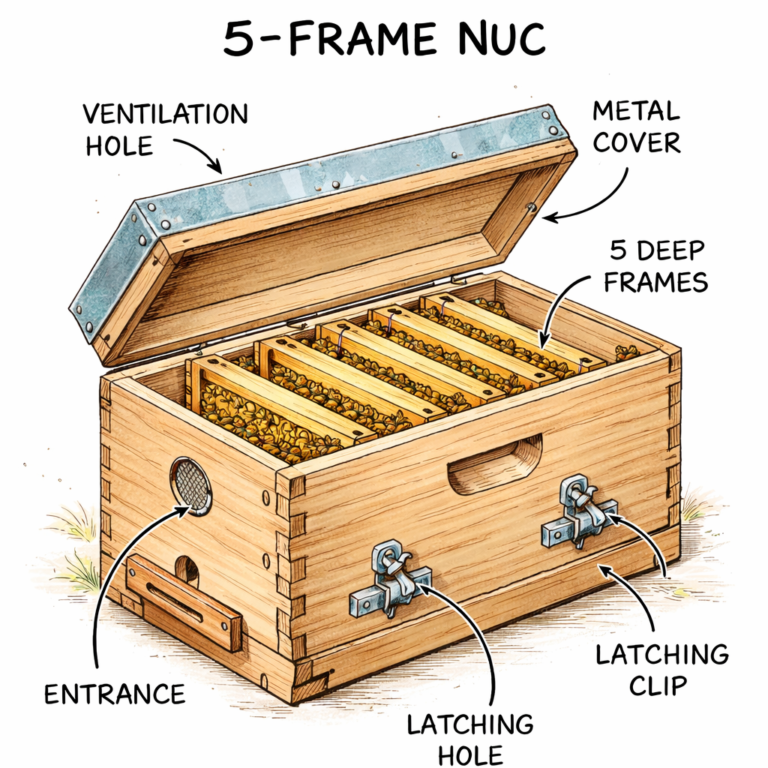
- Look for a 5-frame nuc with:
- A young, laying queen
- Brood in all stages
- Some honey and pollen stores
- Clear varroa management practices
- Prepare in advance: hives assembled, frames and feeders ready, entrance reducers installed, and a varroa monitoring plan
Ordering Nucs: Timing & Tips
- Order early: Many reputable breeders open orders late fall through early winter for spring pickup. By January–February, good sources are often sold out.
- Spring pickup matters: Nucs are usually available April–May, depending on your climate. Earlier isn’t always better—local weather stability is key.
- Buy local if at all possible
Local bees are:- Adapted to your climate
- On the same seasonal schedule
- Less stressed than shipped bees
Your local beekeeping association is gold for recommendations.
Two hives is a great call
Starting with two hives is one of the best beginner decisions because:
- You can compare behavior and progress
- You can swap frames if one colony struggles
- Troubleshooting is much easier
What to look for in a good nuc
When ordering, ask or confirm:
- 🐝 5-frame nuc (standard)
- 👑 Young, laying queen (current year)
- 🥚 Evidence of brood in all stages (eggs, larvae, capped)
- 🍯 Some stored honey and pollen
- 🦠 Ask about mite management practices
If the seller is happy to answer questions, that’s usually a good sign.
Where to find nucs
- Local beekeeping association (best first stop)
- Nearby hobbyist breeders
- Regional bee supply stores
- State or county extension services (often have lists)
Avoid impulse buys from unknown online sellers shipping long distances unless they’re very well-reviewed.
Prep your garden before the nucs arrive
Before pickup day:
- Hives assembled, painted, and placed
- Frames ready (waxed or drawn if possible)
- Feeder on hand (you’ll likely need it)
- Entrance reducer installed
- A plan for varroa monitoring from day one
Final Review
If you plan to start two hives, order your nucs early—many sellers take orders in late fall or winter for spring pickup, and good sources sell out fast. Buying local nucs is best since those bees are adapted to your climate and experience less stress.
Starting with two hives is ideal for beginners because it makes comparison and problem-solving easier. Look for a 5-frame nuc with a young, laying queen, brood in all stages, some stored food, and clear mite-management practices.
Before your nucs arrive, have your hives fully assembled and placed, frames and feeders ready, and a basic varroa monitoring plan in place.